
Starting on Sept. 19, 2025, Clark Planetarium in Salt Lake City is holding a competition for all 6th Grade students in Utah. Students will submit their own original media creations using digital media skills related to the three Utah space science SEEd (Science with Engineering Education) standards. These standards are shown below:
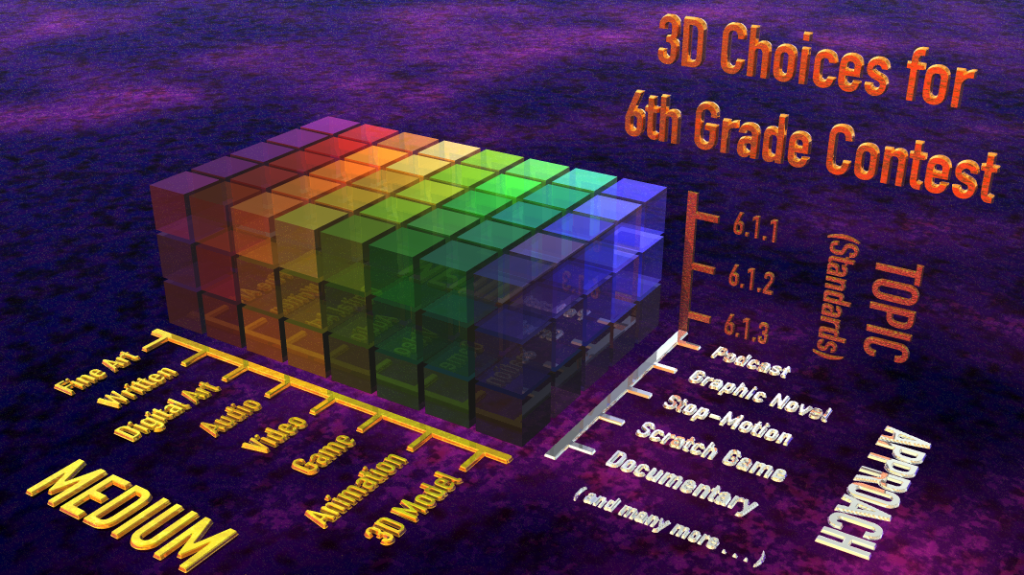
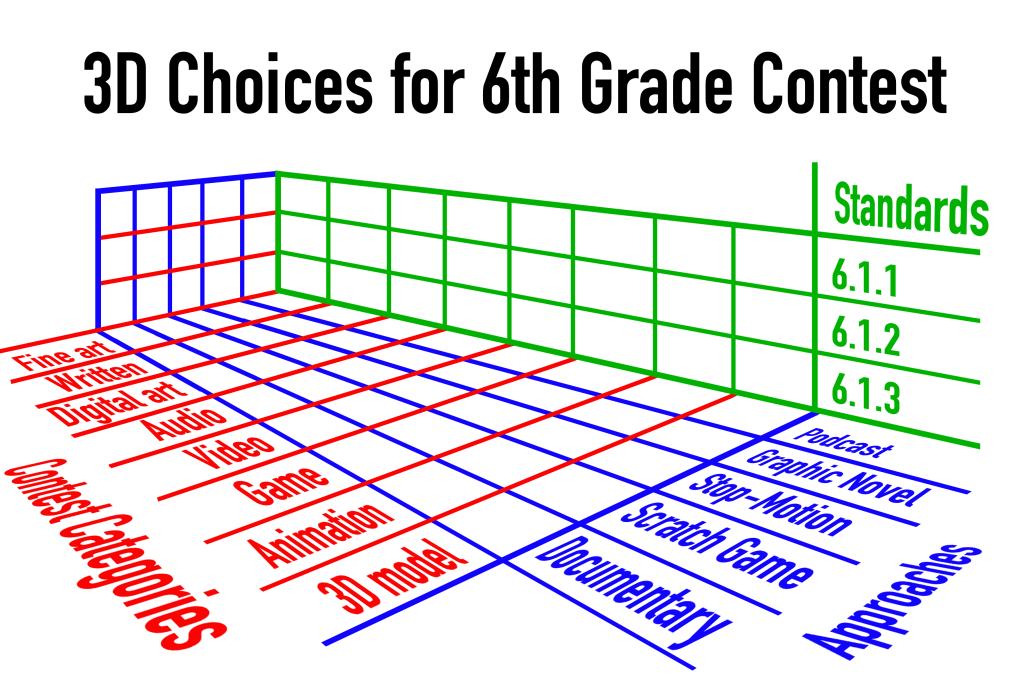
This contest will have eight categories, or types of media that students can create. These are: (1) digital art or illustration; (2) desktop published document with original articles and images; (3) digital presentation or slide show; (4) audio podcast or interview; (5) video (PSA, narrative, documentary, interview, or news report); (6) original game (board game or computer-based) or interactive website; (7) best animation (stop-motion, flip-book, or 2D); and (8) best 3D model (virtual scene, animation, or 3D printed) with labels.

Students will be given their choice of project on three dimensions. First, they can choose any topic within the three SEEd standards (6.1.1, 6.1.2, or 6.1.3). Second, they can choose the type of medium they want to use to create their science communication project. Third, they can choose their own approach, of which there are many possibilities.
To give some examples, suppose a student choose to do a project on the role of gravity and inertia on the motions of the planets (Standard 6.1.2). She decides to create an animation using Scratch, an online game development platform from MIT that uses modular programming blocks. She creates her own 3D images of the Earth with 24 frames showing the Earth rotating 15 degrees per frame, imports them into Scratch as sprites and costumes, then programs button controls to change the orbital distance, orbital speed, and rotational speed of the Earth to demonstrate rotation and revolution.
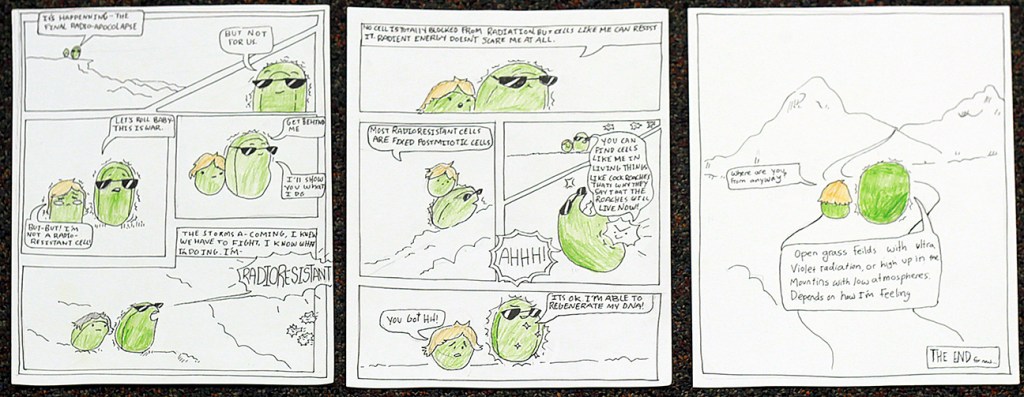
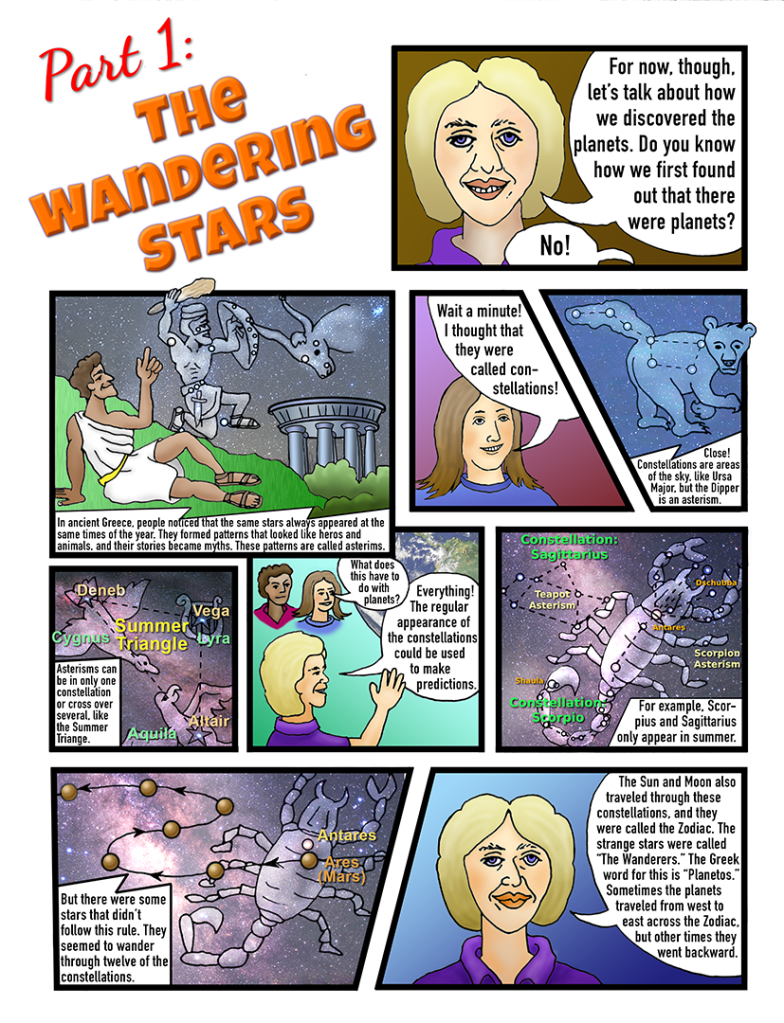
As another example, suppose a student wanted to choose the same topic but instead creates a comic book or graphic novel. He draws a series of cartoon frames with a ruler, then draws and inks in the Earth and other planets and text balloons by hand as line art, then photographs the drawings and imports them into Adobe Photoshop (or Photopea or Procreate) to add color and gradients with background textures and the final text. These separate pages are printed out, placed in plastic sleeves, and bound in a three-ring binder for final presentation or imported into Canva or Adobe InDesign to create a multi-page PDF file.
Or a third example: yet another student decides on the same topic but decides to create a stop-motion animation of the motions of the planets. They create cut-out shapes for the planets and sun, then place them on a dark sheet of paper decorated with silver stars and takes a series of photos as the planets are manually moved around in their correct orbits and relative velocities. They import these photos into iMovie or WeVideo and line them up on the timeline, adding text and narration and exporting the entire sequence as a final movie file.

As you can see, there are many different approaches and media forms that can be used to show understanding of the same concept. Instead of students all doing the same thing, they will have choice and will be more motivated and engaged.
We ask that any Utah teachers that wish to have their students participate email me (David Black) at Clark Planetarium to register your class. My email is: DVBlack@slco.org. The contest will begin on Sept. 19, 2025 and all materials are due by December 19, 2025 at 5:00 pm. You can also register your class directly by clicking on this link to the registration Google Form:
https://forms.gle/oYk1QJ1STvffqZYn7 .
Any time during this semester, teachers can choose a three-week period in which to run the Challenge. Students can learn how to use the software before the three-week period by watching the Digital Media Micro Lessons linked at the top of this page. They will present their project to three peers, who will use a Google Peer Critique form (linked to the Forms & Rules page) to evaluate the projects, then the students have an additional week to make revisions and present the final project to their teachers.
One important feature of this contest is the idea of peer evaluation and revision. When students present their projects in class, their peers will evaluated each other’s projects on a scale of 0 to 4 on five characteristics: (1) Scientific accuracy, depth, and breadth; (2) The project’s creativity and originality (no copyright infringement or use of AI systems, please); (3) The project’s quality and artistry; (4) Appropriate use of the chosen medium or software; and (5) Effective scientific communication using methods commonly employed by scientists and engineers.

In addition to their scores on these five qualities, students will provide suggestions on how to improve that are kind, specific, and useful. We will provide links to Google Forms for these peer evaluations. Once the students have presented to their peers, if they do not like the ratings they received, they are encouraged to revise and improve their projects and then present them again to their teachers for a final score.
For each classroom that participates, we ask that teachers hold their own competition, then send us their top three projects in each category (to the same email as above) by December 20. As an education staff at Clark Planetarium we will judge the final entries and select the first, second, and third place winners in each category based on the same evaluation criteria. The winning students, their teachers and parents, will be invited to an awards ceremony at Clark Planetarium in in mid February 2025 and their projects will be displayed in the Planetarium.
More information is contained in the following flyer:
We hope that you choose to participate with your students. The benefits to your students will be deeper learning of the space science standards, enhanced creativity and engagement, a memorable project, and the opportunity to choose their own approach to learning.
For you as teachers the benefits are the support we will provide as the education staff at Clark Planetarium for teaching the space science standards. This is a ready-made project that will engage and motive your students. You can earn up to ten re-licensure credits depending on the extent of your participation. We will also teach you how to create your own exemplary media project to communicate the state science standards.
Training for students in using the media design software will be done through short Digital Media Micro Lessons (linked above) that are under 3:00 minutes long and each teach a modular part of the software, such as how to add color to black and white line art in Photopea. To certify that they have learned the lessons and to motivate them to watch the training videos, each DMML will have blinking letters that when combined will spell out a secret task that the students are expected to do. When you see that task in their practice projects, you will know they have watched the videos.
This Challenge will also ask students and teachers to complete Google forms answering questions about their participation, what they learned, what challenges they overcame, suggestions for improvement, and the extent that students showed creativity, engagement, and overall excellence. Data from these questionnaires will be compiled and used as part of my Doctoral dissertation at the University of Northern Colorado. I will share the results with you so that you can see how media design projects can help student learn scientific concepts.
Thank you for your interest, and I hope to hear from you!
David V. Black, Education Program Specialist, Clark Planetarium

 The Creative Science Classroom