
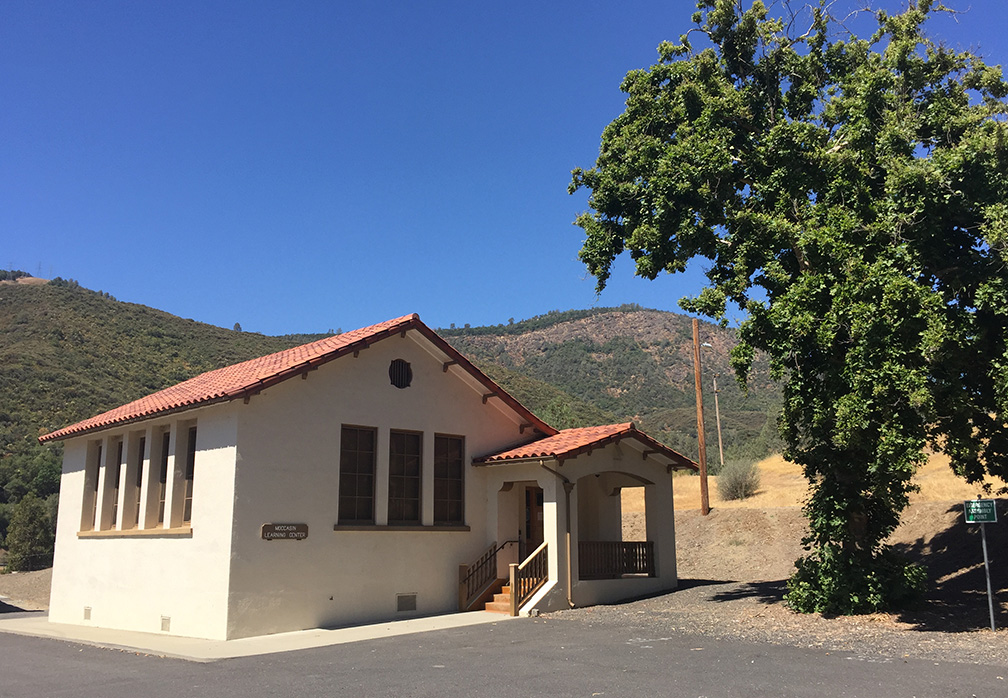
I started teaching in 1990 at a start-up school in the Sierra Nevada Mountains called Tioga High School. It was located near the town of Groveland on the Highway 120 entrance to Yosemite National Park. The school site was not yet ready when we began that fall, so we first taught out of a portable classroom and an old one-room school building in the town of Moccasin, California near Lake Don Pedro and the Hetch-Hetchy hydroelectric plant. I didn’t have a science lab but we did have a nearby forest, and I learned quite a bit about Coulter pines and their unusually large and lethal cones.

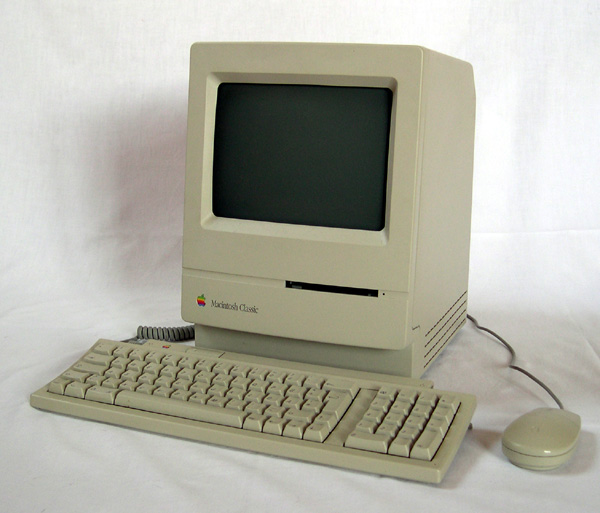
By the time our permanent site was ready out on Ferretti Road, I had ordered six Macintosh Classic computers with 8-inch black and white monitors. I had taught some computer classes such as Lotus 1-2-3 before and that made me the expert on computers and the computer teacher by default. Those first computers were loaded with a program called HyperCard, possibly the first multimedia authoring software. Developed by Bill Atkinson at Apple, HyperCard acted like a digital card catalog with cards that could contain text, images, and interactive buttons.
During my third year at Tioga High School, I was teaching chemistry in our new lab building and it was May and nearing the end of the school year. We were starting a unit on families of organic compounds, such as alkanes, alkenes, alcohols, aldehydes, ketones, acids, and so on. I was attempting to draw the relevant structures and radicals on the board and getting nowhere because it was a fine May day and all the students were gazing longingly out of the window at the nearby forest. I realized that I wasn’t terribly excited by what I was doing, either. It was time for something else.

I told the students to pack up their books and that we were heading to the computer lab building, another portable classroom down the hill a short distance. I had no idea what to do and made up a project on the spot as we walked to the lab. It would be a HyperCard stack built by each student on one of the families of organic compounds, including diagrams of the structures, examples, naming systems, uses, and hazards. They were to include an interactive quiz at the end to test the audience’s knowledge. I encouraged the use of images, textual information, and even a bit of humor. Those students that hadn’t taken my computer class were soon up to speed, partnered with students who had, and we were off. We only had our textbooks for information, as the World Wide Web didn’t exist yet (it was about three years too early) and our only online access was still using FTP with an Archie Search through AOL on a single 1200 baud modem. If you don’t know what I’m talking about here, let’s just say that it wasn’t high speed Internet. Yet they still managed to locate and download useful black and white 2-bit graphics.
But a strange things started to happen after about two days. Students started asking me to open up the computer lab during lunch so that they could work on their Organic Chemical HyperCard stacks. They were really into it. When the time came to present their projects, the other students read through the cards, took the quiz, and learned much more about organic compounds than I could have taught them myself. There was no name for what I had done; I know now that it is called Project-Based Learning (PBL) and my assignment happened on the main components of successful PBL: a meaningful question or problem, a chance for students to make their own choices and be creative, the use of digital media software, and a presentation of their product with built-in evaluation.

This was my first student-created digital media project, but it was not my last. Since then, I have tried to incorporate the same elements into other student projects. As the computers and media software have improved, so have the projects and my expectations of students. Once computers became powerful and fast enough to handle digital video, I have included video production as an important skill for my students to learn. I have had to teach them the software as I go, but always the software was a tool for student learning and expression, a means for communicating their understanding of STEM concepts. Students were motivated to learn useful media creation skills while at the same time building creative projects that teach STEM ideas to their peers in class and online.
There have been many incredible projects since that included the visualization of scientific data and working with NASA scientists, students creating scientific posters and presenting them at conferences, and even publishing professional papers. I have found this combination of authentic science with media design effectively captures the imagination of my students. Now, for my doctoral dissertation, I am taking the next step to see if other teachers can implement the same types of projects in their classrooms with outcomes of effective student learning and engagement.
I will share some of the best projects in occasional blog posts here so that you will have extended examples of what Student Created Digital Media projects can achieve, especially when combined with authentic science data.
 The Creative Science Classroom
Leave a comment