


My name is David Black. I am a long-standing science and technology teacher and a doctoral student at the University of Northern Colorado. The videos and blog posts on this website have been designed for two purposes. First, I hope to introduce you to the theoretical and conceptual frameworks of my doctoral dissertation research and what I hope to achieve through it. Second, these posts and their linked videos provide training for students to use browser-based software to build projects that demonstrate mastery of science content. As you learn how to use the basics of each software package, you can also read about examples of projects you can create that demonstrate your science knowledge.
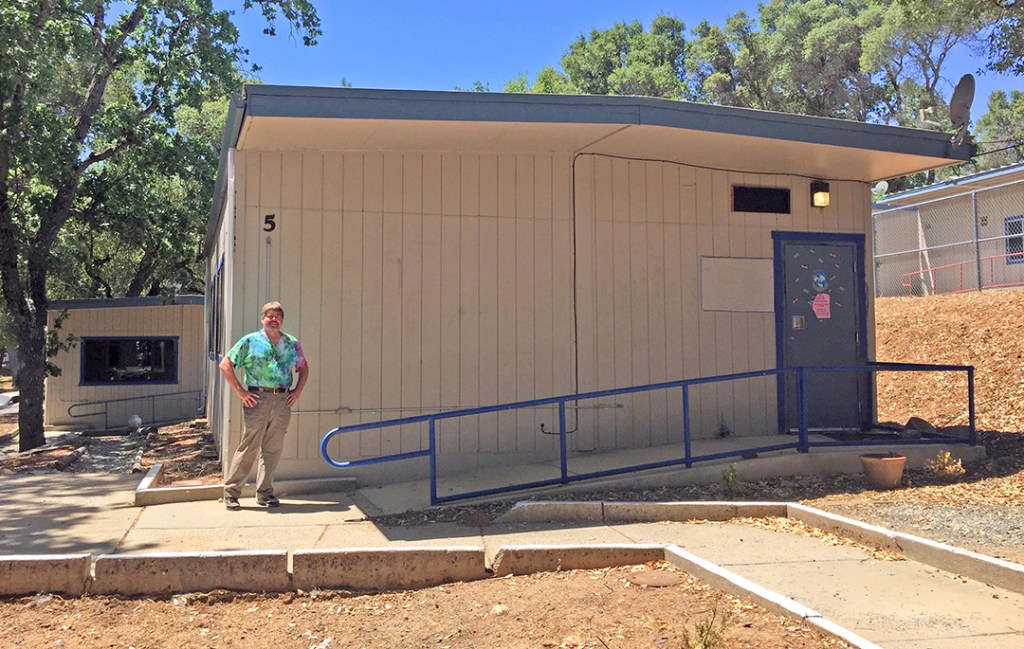
But first, let me give a bit of personal history. I’ve been teaching science and technology classes for over 30 years. I started teaching at a small, new school in the Sierra Nevada Mountains near Yosemite National Park. During my third year of teaching, I was lecturing on families of organic molecules to my chemistry class. It was a beautiful day in May and the students were having trouble listening as I sketched out the structures of alkanes, alcohols, aldehydes, acids, and so on. I realized that we needed to change direction. I told the students to pack up their books and follow me to the computer lab. On the way I decided on a project framework. Each student would choose a family of organic molecules and use Hypercard to build a project with interactive linked cards containing images and text. They would teach each other by showing diagrams of the molecular structures, names, and uses of various sample molecules, and an interactive quiz that provided instant feedback. Since I had most of these same students in my computer applications course, I had already trained them to use Hypercard.

My students truly got into this project; they started asking me to open up the computer lab during lunch so that they could work on it. I had not seen such engagement before.The final projects were fun, unique, creative, and showed deep mastery of the science concepts. They learned much more about organic molecules than they would have if I had continued to lecture. This was my first experience with the power of project-based learning. Since then, I have worked projects and digital media design into all of my science classes.

After 30 years of teaching using PBL, it is time for me to take the next step through a doctoral degree. Just as this first organic molecules project used computer software as a tool for student self-expression and content learning, my dissertation will research how building projects using free browser-based software can lead to improved student engagement, creativity, and content mastery where students have choice in the types of projects they create. But because science teachers already have an overcrowded schedule, it will be difficult for them to work software training into their classes. That is why I am building this site and the linked videos: to explain the theory behind my research and to provide flipped video training on how to use the software to learn science. These videos will be for both science teachers and students.
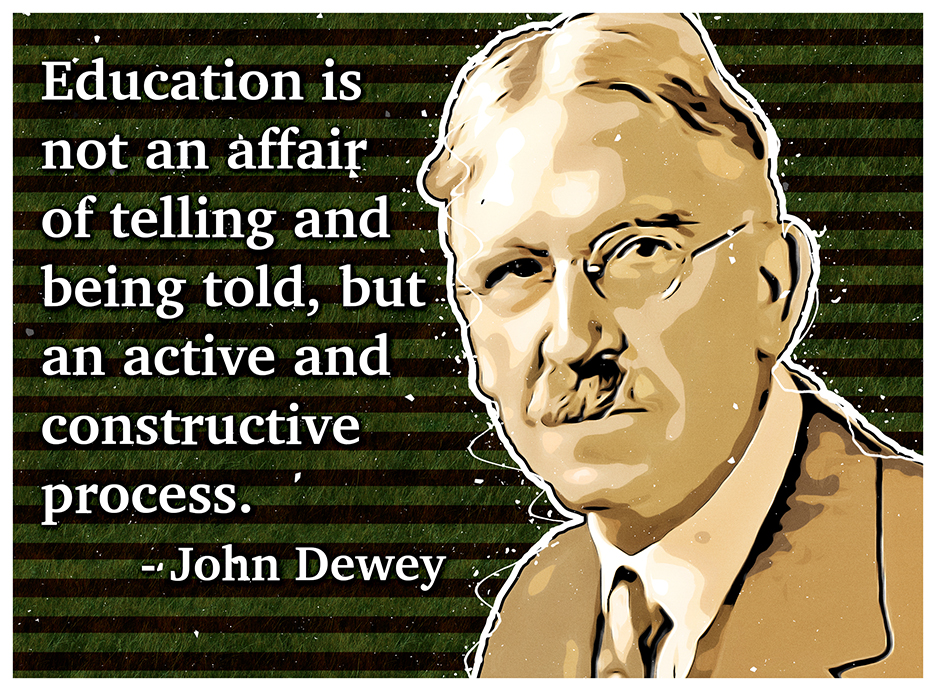
As for my theoretical and pedagogical frameworks, we’ll explore them in detail in subsequent videos. As an introduction, here is a diagram of the conceptual flow of my dissertation. The theoretical foundation of my research rests upon the constructivist theories of Dewey, Piaget, Vygotsky, Bruner, and Eisner. They believed, as John Dewey put it, that “Education is not an affair of telling and being told, but an active and constructive process.” Instead of teachers being at the center of the classroom telling students what they are supposed to learn, students should be at the center and learn through constructing their own meanings for the phenomena they directly experience. Students learn best by doing, actively and creatively, not by passively sitting and listening or watching.
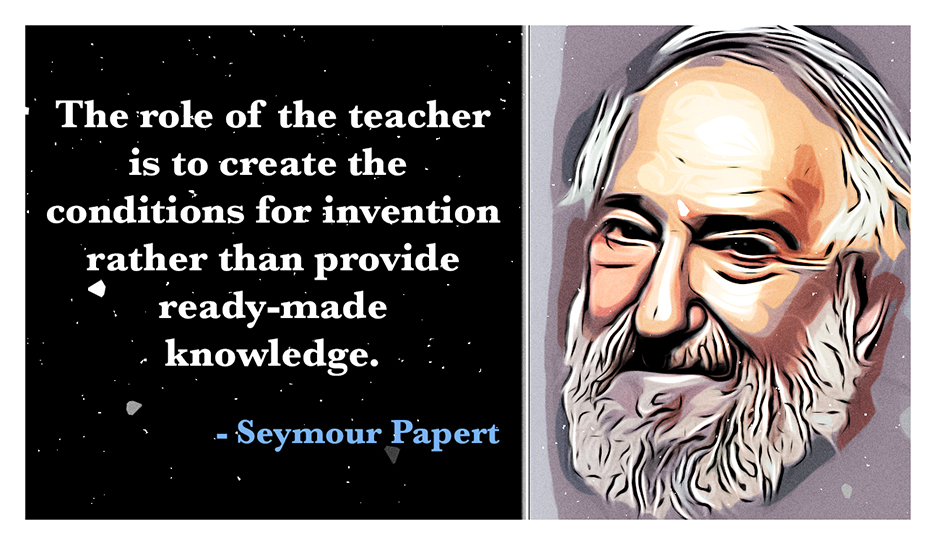
Seymour Papert built upon the work of Piaget to create his theory of constructionism, or learning through computer interaction and programming. Media design software has vastly improved since his time, and should be an indispensable tool for learning. Yet too often in education we still divide subjects into separate silos, with media design as part of Career and Technical Education when it should be used across disciplines to enhance learning in all subjects.

I have developed a conceptual framework of my own that moves students from consuming content passively in a teacher-centered classroom to hands-on, active lessons where students interact with content to students creating new content as scientists, engineers, makers, builders, coders, designers and teachers. My goal is to help students become creative innovators in the sciences.
Since the focus of my dissertation research will be on students using browser-based software for their project designs, I will bring in the theoretical frameworks of multimedia literacy and the affordances, semiotics, and limitations of each form of media.

All students are unique and come with their own strengths, interests, and abilities. In ancient Greek philosophy, each individual was considered to have an inner voice that communed with the Gods through the Muses, the goddesses of the arts. This personal creative spirit was called the Daimon. The key was for each individual to discover and actualize their daimon, as in the Socratic imperatives to first know oneself, then become oneself. In the Roman world, this daimon was called genius, and we each have an inner genius hidden inside, which is the origin of the genie hidden in the lamp. As teachers, part of our job should be to help students find their inner voice, their diamond in the rough, and learn how to express and develop it.

Finally, Benjamin Bloom’s well-worn taxonomy shows different orders of thinking that students should learn, with remembering facts on the bottom level of a pyramid that grows upward to understanding, application, analysis, and evaluation and finally to creating new and useful products at the top. Unfortunately, if teachers follow this sequence of teaching, they will spend most of their time building facts and understanding and will not have time to ever reach creating, the most motivational and highest-order thinking skill. We should invert the pyramid and start with creativity. Or throw the pyramid out entirely.
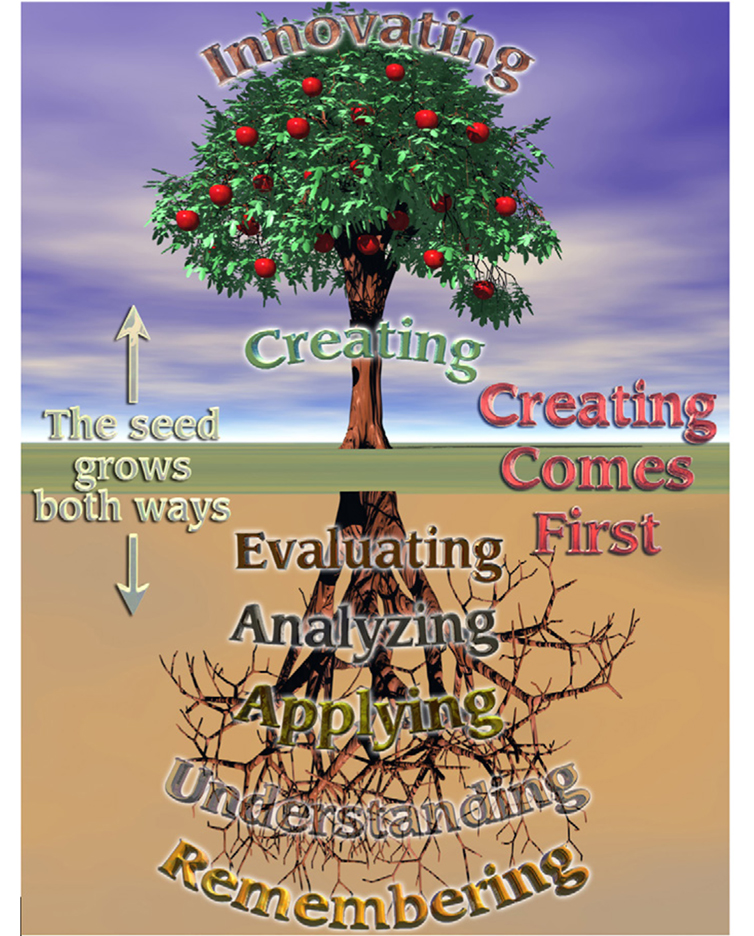
Perhaps a better model is an analogy of an apple tree. We start by planting the seed of creativity by asking our students to create a meaningful product or process that will be used to teach other students. The seed grows downward to form the roots of remembering and understanding the facts they will need, applying them to the creative project, and analyzing and evaluating their appropriateness. The seed also grows upward to the fruit of innovation.
In subsequent posts, we will continue to discuss the pedagogies and processes needed to successfully implement a student-centered science classroom that integrates media design projects. It is my hope that my dissertation research will show desired outcomes for students of enhanced engagement, deeper learning, higher creativity, better quality of work and effort, and ultimately to a fulfilling and enriching life. For society I hope that through implementing project-based and problem-based learning, we can find solutions to intractable problems, become better and more efficacious citizens, develop greater innovation, and improve the overall quality of life.
I hope you enjoy these posts and videos and that you take the opportunity to implement PBL in your own classroom. It certainly has made a difference for me; after 30 years of teaching I am more excited about education than ever as I see the incredibly creative projects my students are designing and how it is changing their lives. Thank you for reading this post and for your interest in improving education.
 The Creative Science Classroom
Leave a comment